Husky sledding in the polar night: what the light is actually like
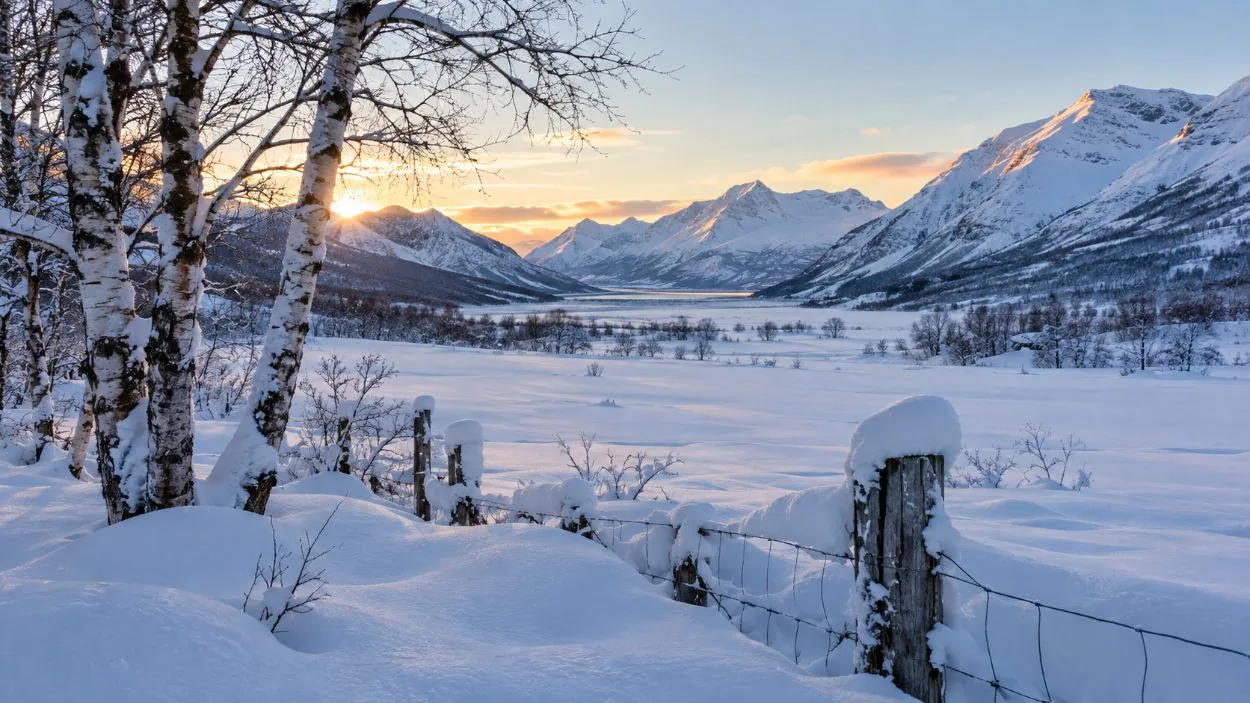
What the polar night is and is not
Between 28 November and 14 January the sun stays below the horizon in Tromsø. Some sources give 27 November to 15 January; either is defensible, and because of the mountains around the city it is effectively dark from about 21 November to about 21 January anyway. December averages 0.0 hours of sun above the horizon. January averages 1.8, February 7.4 and March 11.9.
None of that produces the total black people imagine. Around midday you get several hours of blue twilight, roughly 09:00 to 14:00, and snow throws it back at you. Worked examples for the rest of the winter: 1 January, no daylight at all. 1 February, sunrise 09:25, sunset 14:29, day length 5 hours 4 minutes. 1 March, sunrise 07:10, sunset 16:41, day length 9 hours 31 minutes. The change between those three dates is fast.
What it means for a husky day
Your run happens in that blue window or after it, under headlamps and camp lights. Trails are the same trails. Dogs do not care. What changes is your transfer arithmetic: a 95-minute bus each way to Tamokdalen inside a five-hour light window means most of the driving happens in the dark, while a 25-minute Kvaløya transfer keeps more of the twilight for the trail. Which camp that argues for depends on your month — see the camps page.
What photographs well, and what does not
Blue twilight on snow photographs beautifully and moving dogs in it do not. There is not enough light to freeze a running team without a fast lens and a steady hand, and phone portrait modes make a mess of it. The pictures that work in December are the still ones: dogs in the yard, a lávvu with a fire in it, the mountain line against a sky that is genuinely violet. The practical side of shooting at −15 °C is at taking photos in the cold.
The thing December buys you
Aurora season runs from late August to early April whenever the sky is dark and clear enough, and activity is often strongest between about 20:00 and 02:00. In polar night the dark window is enormous, which is why the evening tours make sense in midwinter. Tromsø sits directly below the auroral oval, so it does not depend on a big geomagnetic storm; what a camp gives you is distance from the city’s light and a drier inland sky. Sightings are never guaranteed by anyone honest. More at northern lights husky tours.
If you are here in December and want to see the landscape as well as the dogs, book the earliest departure available and pick a camp with a short transfer. You cannot add daylight, but you can stop spending it on a bus.
Book the evening tour
For how the light changes month by month against the snow depth, read the best time for husky sledding.
Frequently asked questions
Is it dark all day in Tromsø in December?
The sun does not rise between 28 November and 14 January, but there is usable blue twilight from roughly 09:00 to 14:00. December averages 0.0 hours of sun above the horizon, January 1.8. It reads as twilight rather than night.
Can you go dog sledding during the polar night?
Yes, and tours run right through it. Runs happen in blue twilight or under lights, and the peak booking period from 24 December to mid-February sits inside it. See the best-time page.
When does the sun come back in Tromsø?
14 January. By 1 February the day is 5 hours 4 minutes long, sunrise 09:25 and sunset 14:29; by 1 March it is 9 hours 31 minutes. February and March gain light very quickly.
Is a polar night husky tour worth doing?
If you know it will be twilight rather than daylight, yes — the light on snow is the reason many people come. If you were expecting sunlit mountain photographs, book February or March instead. More at is it worth it.